Effective fire safety involves much more than just fire extinguishers and evacuation signs. Procedures must be followed, risks identified, inspections documented, and deficiencies addressed. For this reason, many organizations appoint a fire safety officer who coordinates and monitors the systematic fire safety program (SBA).
This role is important in a wide range of sectors, from offices, industry, and retail to real estate, schools, healthcare facilities, and public organizations. But what exactly does a fire safety officer do, what responsibilities does the role entail, and what training is required?
Why is a fire safety officer needed?
Under the Act on Protection Against Accidents, owners and holders of rights of use of buildings and facilities must take reasonable measures to prevent fires and limit the consequences should a fire occur.
The Swedish Civil Contingencies Agency (formerly MSB) describes systematic fire safety work as a way to ensure order and organization in an organization’s fire safety efforts. This work must be tailored to the building, the organization’s activities, and the risks involved.
There is no general legal requirement that a person must hold the specific title of fire safety officer. However, the organization must have a well-functioning structure, clear procedures, and a clear division of responsibilities. Appointing a fire safety officer is therefore a common and effective way to coordinate these efforts.
What does a fire safety officer do?
The fire safety officer plans, coordinates, and monitors the organization’s fire safety efforts. Specific duties vary, but the role often includes:
- plan and develop the organization's systematic fire safety efforts
- clarify roles, responsibilities, and authorities
- identify fire hazards and propose preventive measures
- ensure that regular fire safety inspections are conducted
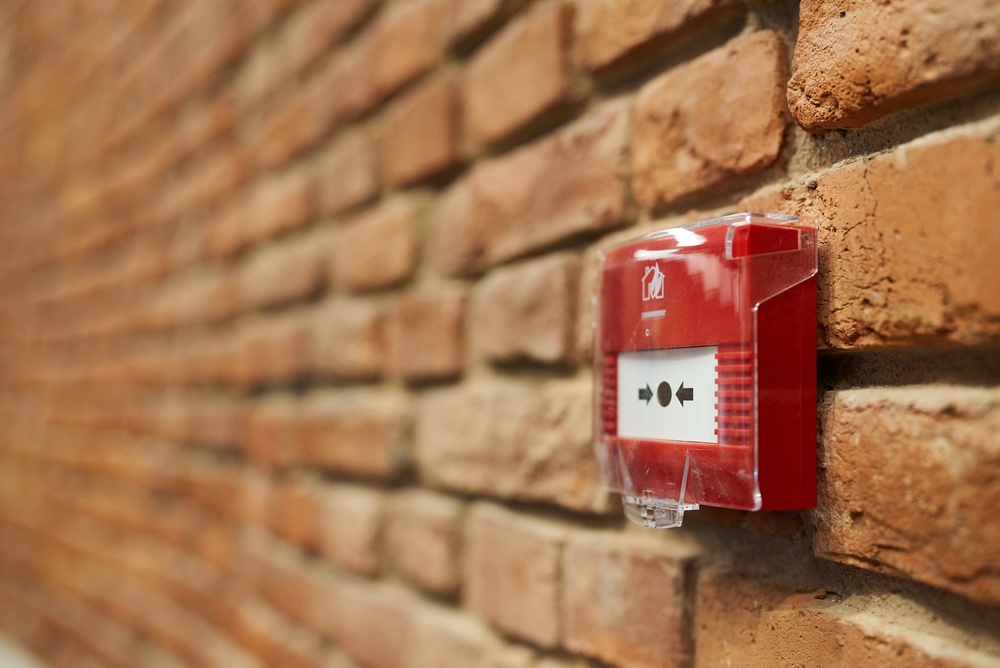
- monitor evacuation routes, fire doors, signage, and fire extinguishing equipment
- document deficiencies, corrective actions, responsible parties, and timelines
- plan information sessions, training, and evacuation drills
- collaborate with property owners, contractors, and service providers
- follow up to ensure that identified deficiencies are actually addressed
- report the status of fire safety to management
The fire safety officer must therefore be able to see both the big picture and the practical details.
Who is legally responsible?
The fact that an employee is appointed as the fire safety officer does not automatically mean that the organization’s management, the property owner, or the holder of the right of use transfers its legal liability to that person.
The fire safety officer works within the scope of their assignment and authority. Therefore, the assignment should be clearly documented and specify:
- what duties are included
- which controls the person is responsible for
- what powers the person has
- how to report defects
- who decides on and funds measures
- how follow-up should be conducted
A clear job description reduces the risk of important issues falling between different areas of responsibility.
The Difference Between a Fire Safety Officer and a Fire Safety Inspector
The fire safety officer typically plays a coordinating and supervisory role. The fire safety inspector works in a more hands-on capacity and conducts regular inspections on-site.
For example, the inspector can verify that:
- Evacuation routes are clear
- fire doors function properly and are not installed incorrectly
- Fire extinguishers are available and properly labeled
- Signage is visible
- fire compartment boundaries have not been damaged
- Flammable materials must not be stored improperly
- Previously reported discrepancies have been resolved
In smaller businesses, the same person may serve as both the fire safety officer and the fire safety inspector. In larger organizations, these roles are often divided among several people or departments.
What skills does a fire safety officer need?
The person responsible for coordinating fire safety must understand how technical and organizational measures work together. This includes, among other things, knowledge of:
- systematic fire safety efforts
- fire hazards associated with the operation
- Division of Responsibilities Between the Business and the Property Owner
- Evacuation Routes and Evacuation Procedures
- fire compartments and fire doors
- fire alarms, evacuation alarms, and fire extinguishing equipment
- Risk Assessment and Self-Monitoring
- Documentation and Nonconformance Management
- training, information, and practice
In addition, skills must be kept up to date as operations, facilities, work methods, or regulations change.
When should the training be conducted?
Education is particularly relevant when a person:
- is assigned a new role as fire safety officer
- will begin conducting internal fire safety inspections
- takes over responsibility for new or modified facilities
- needs to develop the organization's SBA documentation
- will coordinate property owners, contractors, and internal departments
- need to refresh older knowledge
- has identified recurring shortcomings in fire safety efforts
Training should always be supplemented with the organization’s local procedures, risk assessments, evacuation plans, and division of responsibilities.
Build a Comprehensive Fire Safety Organization
A fire safety officer cannot single-handedly handle all of an organization’s fire safety work. Different roles require the appropriate knowledge based on their specific duties.
Kravkompetens offers, among other things:
By training managers, inspectors, and other staff, fire safety becomes an integral part of the business rather than just a file that is pulled out only during inspections.
Online Training for Fire Safety Officers
The Kravkompetens training program for fire safety officers and fire safety inspectors is conducted entirely online and consists of six digital training modules.
The course lasts about six hours and covers topics such as roles and responsibilities, fire hazards, technical fire protection, evacuation, inspections, documentation, and follow-up.
You study at your own pace and have access to the course for 365 days. The program concludes with a theoretical knowledge test consisting of 20 multiple-choice questions. Upon passing the test, you will receive a digital diploma from Kravkompetens.
Frequently Asked Questions About the Fire Safety Officer
Is it a legal requirement to have a fire safety officer?
There is no general requirement that a person must hold this specific title. However, the organization needs to structure its fire prevention efforts and clarify who is responsible for various tasks.
Can the same person serve as both the fire safety officer and the inspector?
Yes. In smaller businesses, it is common for the same person to both coordinate fire safety efforts and conduct regular inspections.
Does the fire safety officer assume the management's legal liability?
No, not automatically. The person coordinates the work within the scope of their assignment. Ultimate responsibility continues to rest with the relevant owners, right-of-use holders, and operational management, based on their respective areas of responsibility.
Can the course be taken entirely online?
Yes. The Kravkompetens training is conducted digitally on a computer, tablet, or smartphone and can be completed in several sessions.




 Electrician Training
 Thermoset

 working with electricity